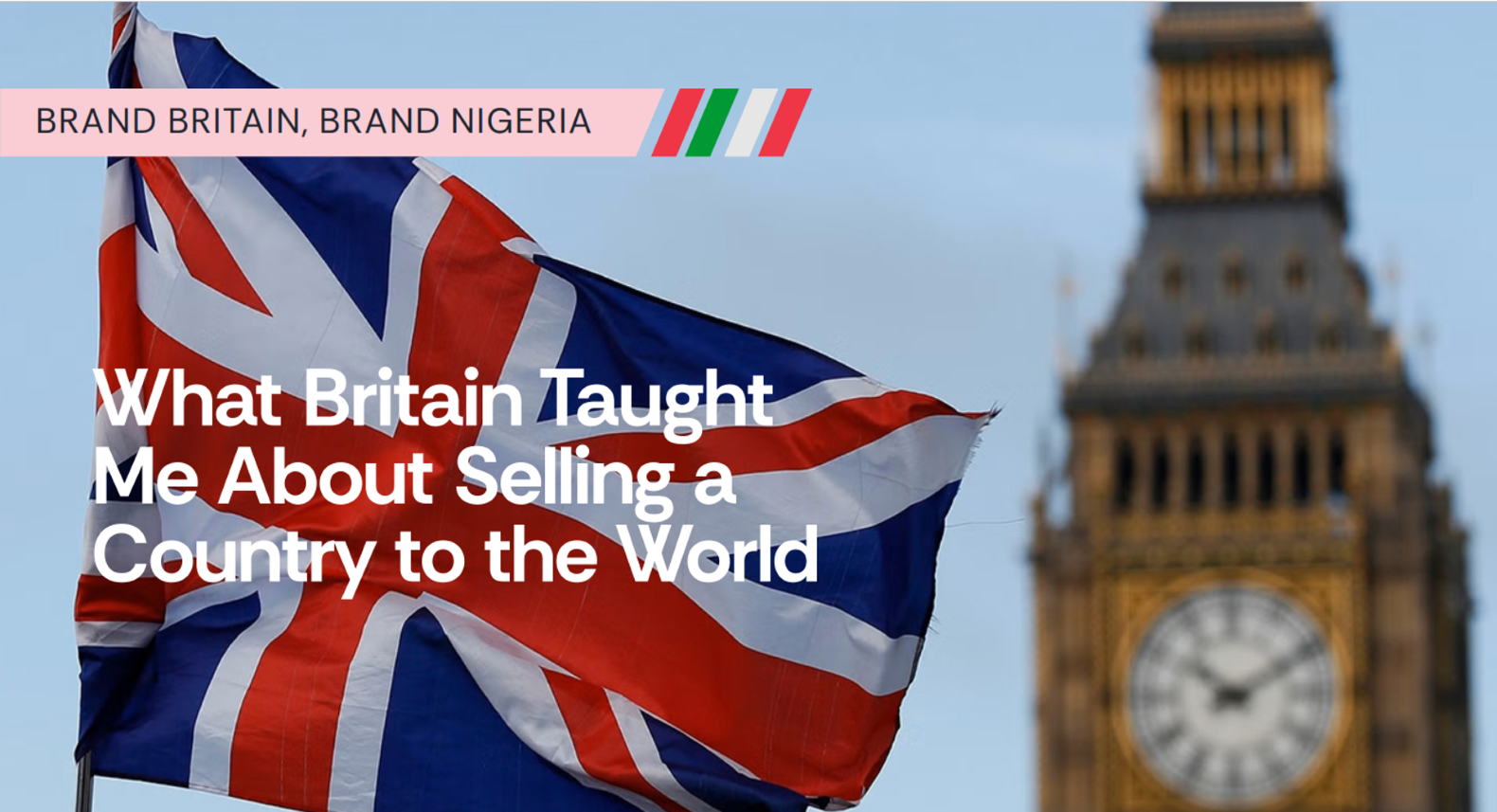
What Britain Taught Me About Selling a Country to the World
I have spent many years thinking about Nigeria. Not just Nigeria as a country, but Nigeria as a brand.”
Why does the world see us the way it does? What do Nigerians think about themselves? What does the rest of the world think about Nigeria? And, perhaps most importantly, what could we do differently if we became more deliberate about the story we tell about ourselves?
I have written about this, spoken about it and presented papers on it. Through the #IAMBRANDNIGERIA initiative, I have tried to push the idea that Brand Nigeria is not just the responsibility of government alone, but a collective one.
It belongs to all of us.
I have argued that every Nigerian is, whether consciously or unconsciously, a stakeholder. Its asset and liability robbed on us all, we are all ambassador for the brand Nigeria.
I have also spent considerable time thinking about what I believe could be our most believable and easily sellable national narrative: the Resilient Naija Spirit - that extraordinary Nigerian determination to keep going, keep trying and keep finding a way, even when the odds appear to be against us.
But over the past few months, I found myself looking at Nigeria from somewhere else.
Britain.
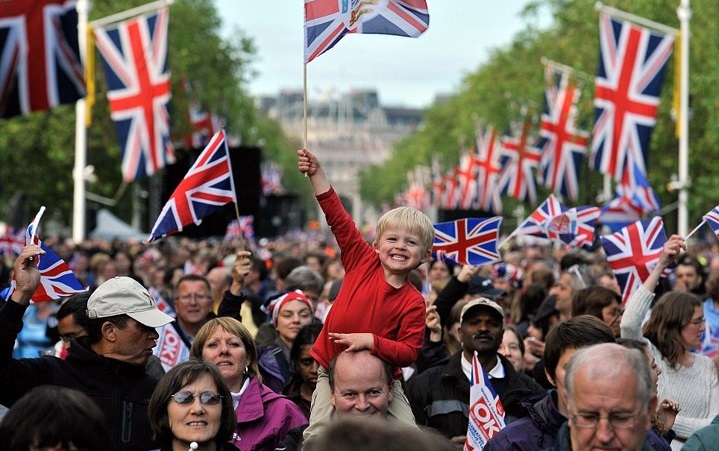
And the more I observe Britain, the more I have begun to have some adjustment about Brand Nigeria.
Not because Britain is perfect. It certainly isn't.
Not because everything about Britain should be copied. It shouldn't.
And certainly not because I believe Nigeria needs to become British, we wouldn’t.
Britain has simply given me a different lens through which to look at Nigeria, and what I have seen is kind of fascinating.
Britain is not just a country. It is a collection of brands.
If you spend some time in Britain, you begin to notice something… the country seems to be everywhere.
Not necessarily through advertising, but through symbols, places, iconic buildings, history, institutions, the people and their stories.
In London, there is the red double-decker bus, the black cab, the Underground, the Buckingham Palace, the Houses of Parliament, the universities, of course the Premier League football, The BBC, the pubs, afternoon tea, The castles, Museums, Wimbledon, not to forget, the James Bond and even the English language itself.
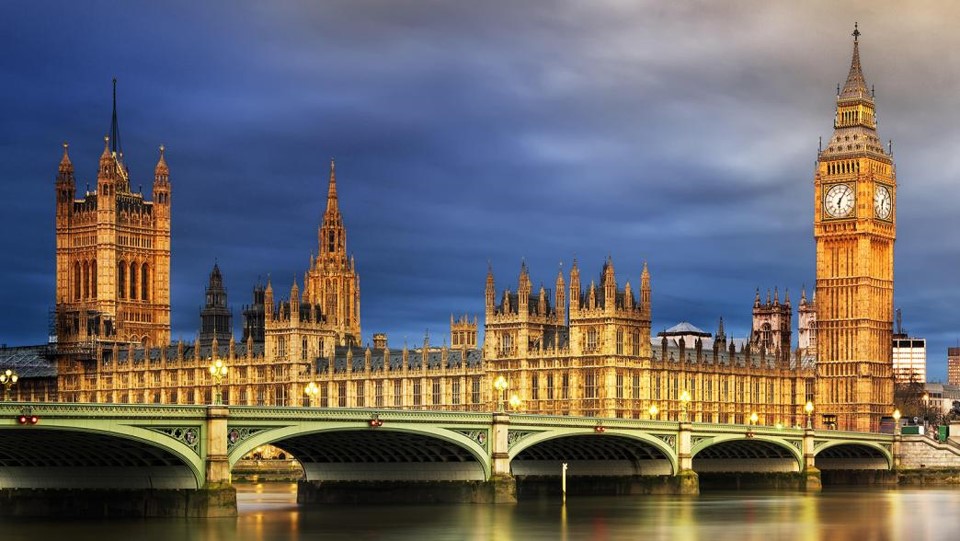
Some of these things are ancient, some are modern, some are commercial. Some are cultural and some are simply part of everyday life. But together, they create something powerful.
They create a mental picture.
When somebody says "Britain” or “Great Britain", millions of people around the world already have an image in their minds. That is what a powerful national brand does.
It doesn't necessarily tell people what to think. It gives them enough familiar symbols, stories, experiences and associations to form a picture.
Does Britain reputation takes care of itself?
This was perhaps one of the things that struck me most. Britain is already famous, London one of the world's most recognisable and visited cities globally. Their universities are globally respected and most sort after, their culture had been transferred across the world for generations.
Yet Britain continues to invest in telling its story.
They do this via various vehicle
VisitBritain for example - their job is literally to promote Britain to the world. And the numbers show that this is not simply a matter of producing beautiful brochures and running some ads.
In 2024, international visitors made an estimated 42.6 million visits to the UK and spent £32.5 billion.
VisitBritain estimates that its activities generated an additional £562 million in visitor spending in 2024/25, with 60% of that additional spending, about £336 million, going to destinations outside London.

Then there is the fascinating example of Starring GREAT Britain, a global campaign launched in 2025 using British film and television to encourage international visitors to explore Britain.
In just six months, VisitBritain estimates that the campaign generated £217 million in additional visitor spending.
For every £1 invested in the campaign, it estimates that visitors spent an additional £20 in Britain.
Now, think about that for a moment.
A country is taking something it already owns- its films, television, landscapes, cities, culture and stories, packaging those assets and deliberately putting them in front of the world.
That is nation branding, I tell you.
Perhaps the best example is London.
Even London is still selling London, can you beat that?
Ordinarily, you would think London needs no introduction.
I mean, its London, the Queen and now King’s city.
Yet in June 2026, the Mayor of London announced a new £7 million international tourism and investment campaign to promote the capital across Europe, the United States and Asia.
The campaign is designed to showcase London's heritage, culture, creativity, innovation and role as a centre for trade and investment, while also responding to negative narratives about the city circulating online.
Now, if London still needs to sell London, then perhaps we should have a deliberate workable plan on ours.
I am not suggesting that Nigeria should spend £7 million copying London's campaign, no.
No matter how well known you are, reputation still requires attention.
Being famous is not the same as being well positioned, being known is not the same as being understood. And having enormous potential is certainly not the same as converting that potential into value.
One of the interesting things I have noticed here is the strength of place branding.
Britain is not marketed simply as Britain.
London has its own identity.
Manchester has its own identity.
Liverpool, Edinburgh, Bermingham, York and so on, all have their own identity
Even smaller cities and towns are increasingly encouraged to understand what makes them distinctive and to turn that distinctiveness into economic value.
VisitBritain's recent work is particularly interesting because it is deliberately trying to spread the benefits of international tourism beyond London. In 2024/25, according to their data, 60% of the additional visitor spend attributed to VisitBritain's activity went to destinations outside London.
So, that got me thinking.
We talk a lot about Brand Nigeria.
But what about Brand Lagos?
Brand Abuja?
Brand Kano?
Brand Ibadan?
Brand Enugu?
Brand Port Harcourt?
Brand Calabar?
Brand Aba?
Brand Ado-Ekiti?
What if every major Nigerian city became much more deliberate about answering a simple question:
Why should the world care about us?
Not every city needs to compete for the same people. We all have distinctive characteristics.
One might be a technology hub.
Another might own a cultural heritage story.
Another might be an agricultural centre.
Another might sell tourism.
Another might sell its educational heritage etc.
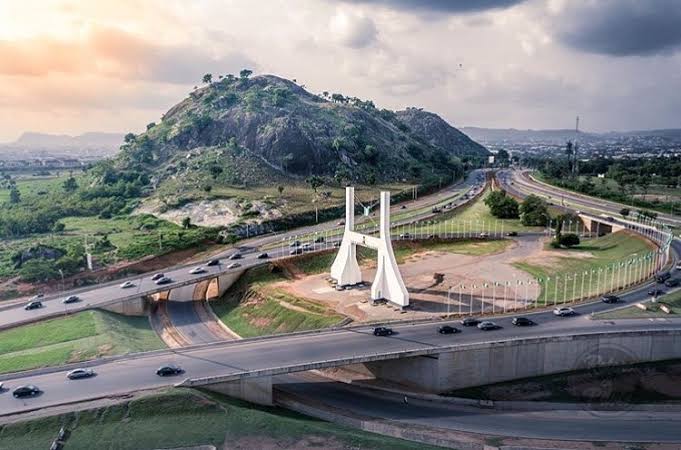
All the 36 states plus the FCT, and also the major cities have their individual distinct sellable features
A stronger collection of Nigerian place brands could make Brand Nigeria stronger.
Talking about history. It is impossible to observe Britain without encountering history.
It is everywhere. In the architecture designs, the museums, names of streets, the parliament, the monarchical system etc.
For many Nigerians, Britain is not simply a country we visit, it is the country that once ruled Nigeria. Nigeria was part of the British Empire until independence in 1960. That history cannot simply be erased.
But I have also been thinking about what it means to look at Britain today from the position of an independent Nigerian.
Maybe a better way to frame it is:
We are no longer looking at Britain as a colony looks at its colonial master, rather as one nation can look at another.
We can admire what works and question what seems not.
We can understand how its institutions evolved and examine how its culture has become global.
We can study how its cities are marketed. We can observe how its history has been converted into tourism, education, cultural influence and economic value.
And then, we can then ask - what can Nigeria learn without losing itself?
That, for me, is the more interesting question.
Britain has "Britishness". Nigeria has the resilient Naija Spirit.
The more I have thought about this, the more convinced I have become that Nigeria does not lack a story.
Perhaps we simply have not organised our story well enough.
Britain has accumulated a collection of associations that people around the world recognise as "British".
Nigeria has them too. We have our Afrobeat, our Nollywood, our unique style of speaking and boldness, our festivals, our huge youthful population, our Jollof, our Asoebi, our resilience - that extraordinary drive to achieve success.
And, above all, our people.

This brings me back to something I have written and talk about many times and still passionate about-
The Naija Spirit.
The inbuilt strong desire and tenacity that make us keep going, against all odds to achieve success.
A young man and sometimes, lady would leave their family and friends, their known support system behind for Lagos, Abuja, Kano, Ibadan, Onitsha or Port Harcourt believing that somewhere in that enormous city there must be an opportunity.
The Nigerian who arrives in London, Manchester, New York, Paris, Toronto, Melbourne or elsewhere in the world and begins again.
The Nigerian who discovers that the first job is not the dream job, but takes it anyway.
The Nigerian who studies at night, who works two jobs just to meet up tuition payment.
That is not just "hustle". There is something deeper here that most us us can relate with.
It is a national character trait. It is the belief that there must be a way.
That is what I call the Naija Spirit.
But resilience is not enough, there is an important warning here.
We must never become so proud of Nigerian resilience that we become comfortable with the conditions that require so much resilience in the first place.
A country should not celebrate the fact that its citizens can survive almost anything and become complacent.
The real ambition should be to make a country where people do not have to struggle unnecessarily just to live decent lives.
Our goal should not be to make Nigerians better at surviving Nigeria, rather, it should be to make Nigeria better for Nigerians.
The Naija Spirit should therefore not be a celebration of hardship. It should be a celebration of possibility, creativity and the refusal to give up.
The Nigerian is about Nigeria's greatest brand assets
This is where the British experience brings me back to one of the things I have advocated through the #IAMBRANDNIGERIA vehicle.
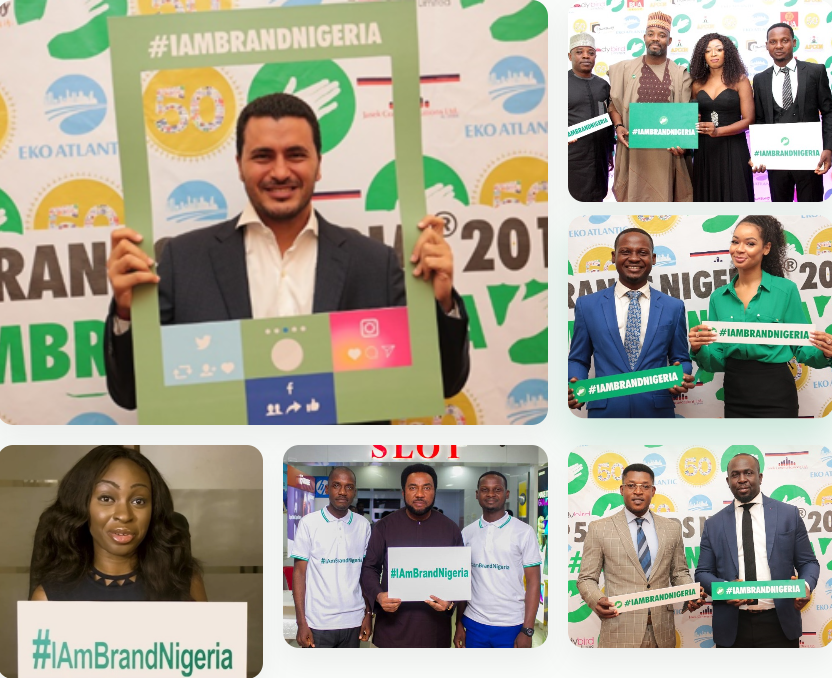
I believe that every Nigerian is a Brand Nigeria Ambassador.
We are everywhere in the numbers and we arnt among the low-level class people. We are the thorough breed professionals, the surgeons, the heavyweight champion, novelist, WTO chair person, the footballer, the musician, the athlete.
Every one of these people becomes a point of contact between Nigeria and the rest of the world.
They are our brand ambassadors.
And this is why I believe the Nigerian diaspora should be regarded as much more than a source of remittances. It is a global network of Nigerian knowledge, talent, relationships, capital and influence.
There is another lesson Britain offers us.
A national brand cannot be built by pretending.
No country is perfect. Britain has its own economic problems, political disagreements, its own inequality crazy cost of living.
Its cities have problems. Even the celebrated history is debated, yet none of these mean Britain stops telling its story.
And importantly, its story is not simply:
"Britain is perfect." No
It identifies things that are genuinely valuable and makes them visible.
That is what Nigeria should do.
We do not need to tell the world that Nigeria has no problems.
We need to give the world more reasons to see Nigeria beyond its problems.
Perhaps the real lesson for me is not about Britain at all.
After all these months of observing Britain, I find myself thinking less about Britain and more about Nigeria. Sometimes you have to leave home to see home differently.
Britain has reminded me that countries have stories.
Cities have stories.
People have stories.
Institutions have stories.
History has stories.
And when these stories are consistently connected to real experiences, they become something much more powerful than advertisement. Something of immense value.
And we have something perhaps even more valuable:
A people who refuse to give up.
Nigeria does not lack the assets to build a powerful national brand. What we need is greater intentionality in how we organise, communicate, protect and convert those assets into reputation, relevance and value. And that responsibility does not belong to government alone. We are all Brand Nigeria.
The question is whether we can turn all these individual assets into a coherent national proposition.
I believe we can.
But it will not happen because somebody in Abuja writes another slogan, a fanciful logo or another television commercial.
It will happen when government, business, institutions, cities, the diaspora and ordinary Nigerians begin to understand that we are all participating in the construction of Brand Nigeria every single day, regardless of our ethnicity, religion or political affiliates and differences.
I am Brand Nigeria. You are Brand Nigeria, we are all brand Nigeria.
Every Nigerian is a Brand Nigeria Ambassador.
This is why I still believe in #IAMBRANDNIGERIA.